
Based in Rotherham, South Yorkshire
Damp, mould or rotten timber? Get a straight answer.
Beech is a damp proofing and timber treatment firm. Tell us what you have noticed and we will tell you what it is.
- Family-run
- Over 30 years in the trade
- Free quotes

Get a free quote
No obligationor call 07579 009 735
We will get in touch as soon as we can. Privacy policy
For over 30 years, our Rotherham family firm has dealt with damp walls, black mould, rotten joists and woodworm in homes and commercial buildings across South Yorkshire. We find the cause first, then quote for the work that will fix it.
Use our damp and timber checker
What is causing it? Find out in a minute
Tick the signs you have noticed and the checker shows the likely causes and what usually puts them right. It asks for no contact details, and you can get in touch knowing what to ask.The usual causes of damp and timber problems, the signs each one leaves, and where to find out more.
Here for another reason?A tenant has reported damp or mouldA survey has flagged damp or timber
Your likely causesThe usual causes, and their signs
One sign on its own can have more than one cause. Tick anything else you have noticed for a closer match.
More than one of these can be at work at once. We tell them apart when we look.

Condensation and mould
Warm, moist air from cooking, washing and drying clothes settles on the coldest surfaces, and black mould grows where they stay wet.
Usual signs: peeling paint or wallpaper, black mould in corners or behind furniture and windows wet most mornings.
You noticed
What usually fixes it
Ventilation and heating usually matter more than chemicals. We find out why the moisture is not escaping, and how to clear it.
Worth knowing: In the meantime, extractor fans, open trickle vents and drying clothes outside where you can all help.
Worth knowing: Condensation can leave marks low on a cold wall too, so it is worth ruling out before any damp proofing.
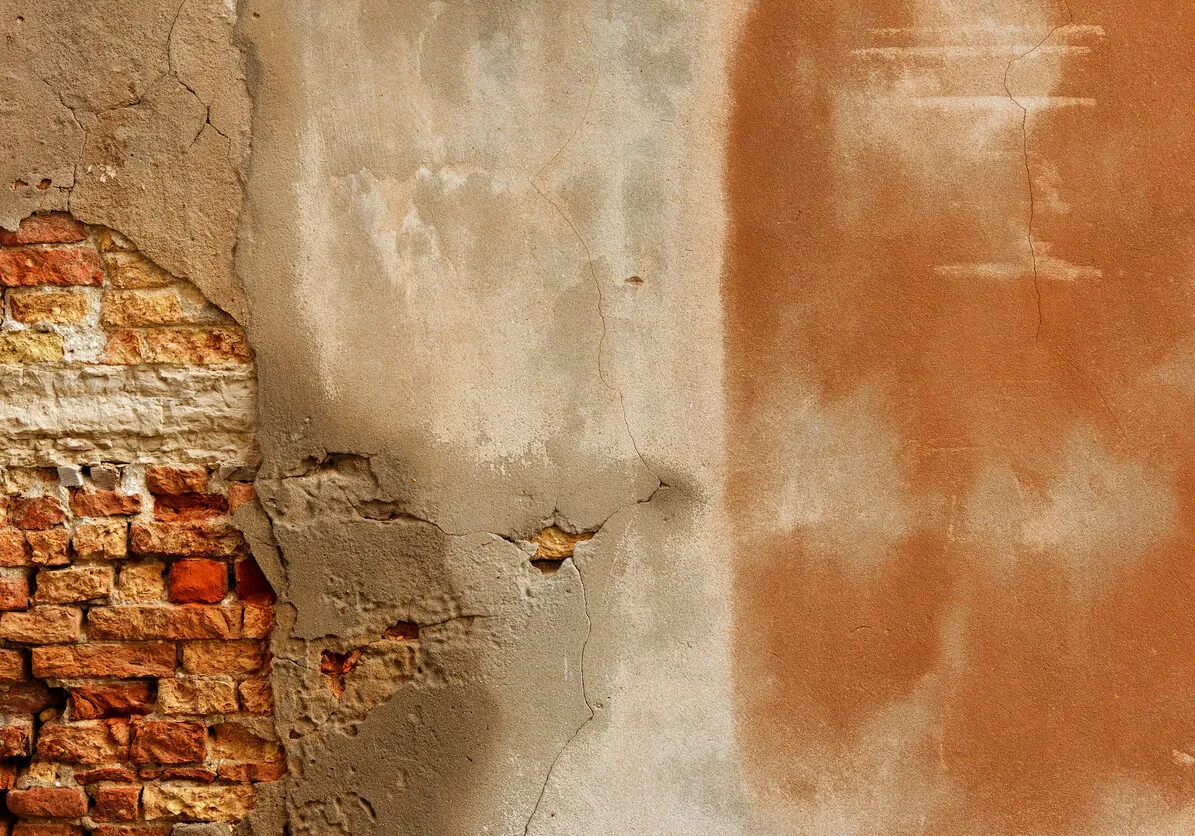
Penetrating damp
Rain getting in from outside: through worn pointing, cracked render, a leaking gutter or round a window. It can show at any height, and often grows after wet weather.
Usual signs: crumbling plaster near the floor, a damp patch worse after rain, damp high up or on a ceiling, worn pointing or cracked render and a leaking gutter or downpipe.
You noticed
What usually fixes it
The fix is usually outside, so we find where the water is getting in before recommending anything inside.
Worth knowing: Damp high on a wall or on a ceiling is rarely rising damp. Water from above, such as a roof, gutter or pipe, is more likely.
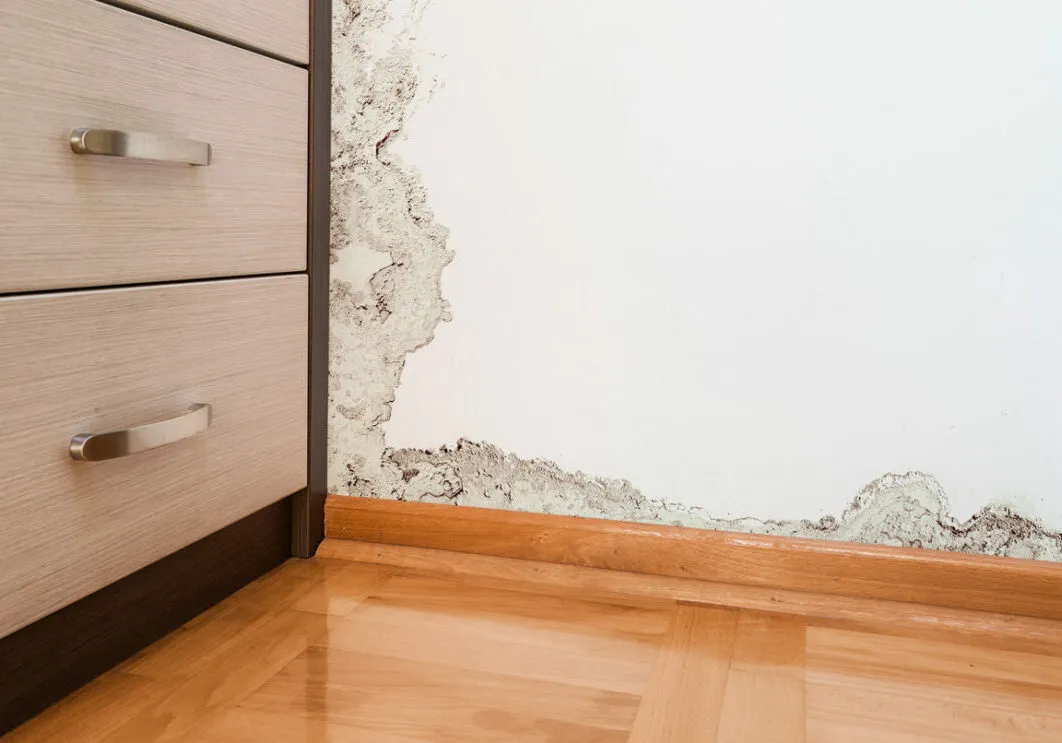
Rising damp
Moisture from the ground soaking up the bottom of a wall, past a damp proof course (the barrier that should stop it) that has failed, been bridged, or was never there. It seldom climbs much above a metre.
Usual signs: tide marks low on a wall, crumbling plaster near the floor, white powdery salts on a wall and soil or paving high against a wall.
You noticed
What usually fixes it
A leak, raised ground outside or condensation can leave the same marks, so we check which it is before recommending a new damp proof course.
Worth knowing: Soil or paving above the damp proof course lets moisture straight past it. Lowering it can be the whole fix.
Worth knowing: The white deposits are salts carried up from the ground. They draw moisture from the air, so salty plaster usually needs replacing.
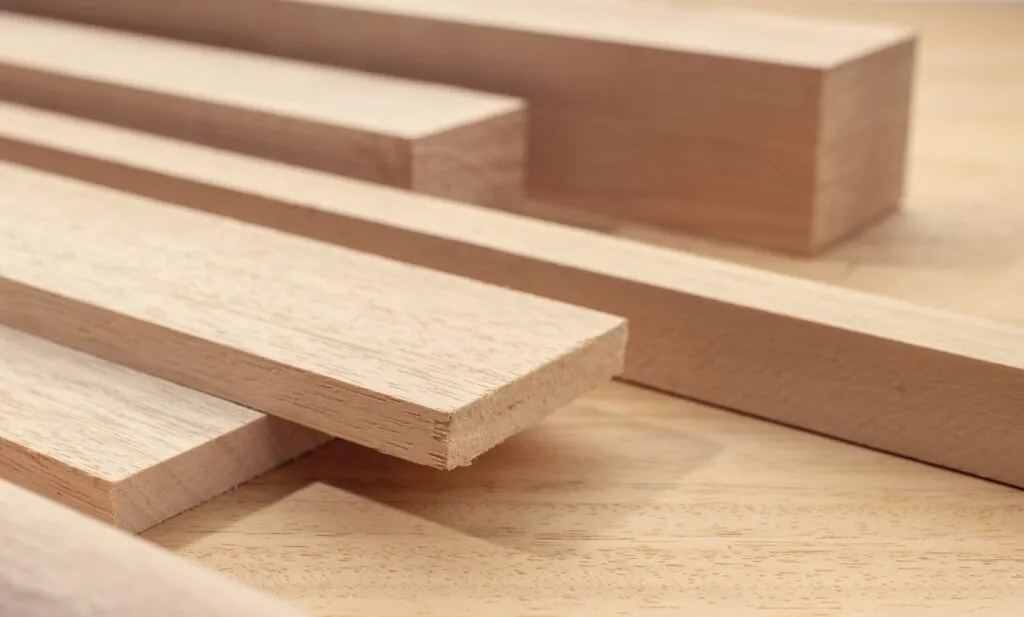
Wet rot
Timber decaying because it has stayed wet, usually from a leak, damp in a wall or poor ventilation under a floor. It stays where the wet is.
Usual signs: a soft or springy floor, dark, soft or crumbly timber and timber cracked into cubes.
You noticed
What usually fixes it
Once the water is stopped, wet rot stops too. We take out timber that has lost its strength and replace it with pre-treated timber.
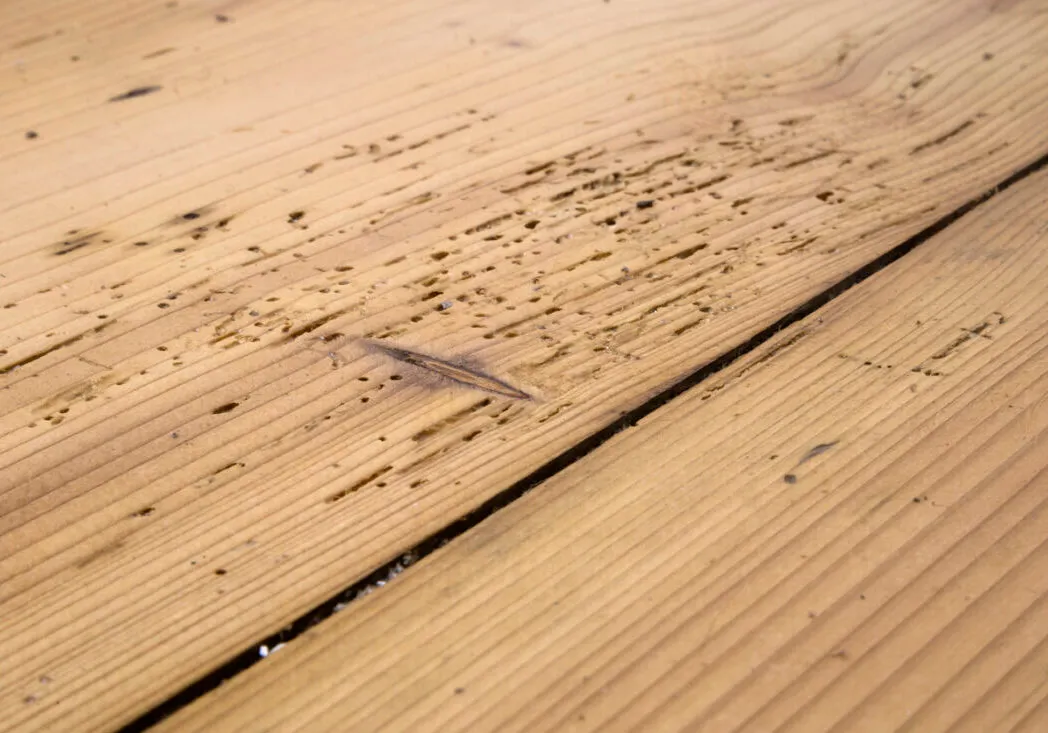
Woodworm
Beetle larvae that tunnel through timber for years, then leave by small round holes. Fine, pale dust beneath the holes suggests they may still be active.
Usual signs: small holes in timber, with dust.
You noticed
What usually fixes it
Old holes that are dark inside, with no fresh dust, can mean the beetles left long ago and nothing needs treating. We check before treating anything.

Dry rot
Worth having looked at soon
A fungus that can spread beyond the wet timber where it started, sending strands through brickwork to reach sound wood. White cotton-wool growth, rust-red dust and timber cracked into cubes are its signs.
Usual signs: a soft or springy floor, timber cracked into cubes, cotton-wool growth on timber and rust-red dust near timber.
You noticed
What usually fixes it
It needs the source of damp found, and the affected timber and the masonry around it treated, not only the wood you can see.
Wall tie failure
A cavity wall is two layers of brick held together by metal ties. As old ties rust they swell, cracking the mortar every few rows, and the wall can start to bulge.
Usual signs: horizontal cracks in the mortar and bulging or leaning brickwork.
You noticed
What usually fixes it
Cracks and bulges can have other causes, so we check the ties first, then fit new ones where the old ones have failed.

Failed cavity wall insulation
Insulation in a wall cavity can carry rain across to the inside wall, especially on walls that take driving rain, or where it has got wet or slumped.
Usual signs: damp cavity wall insulation.
You noticed
What usually fixes it
Where it is causing damp, the insulation can be taken out and the cavity cleared.

A damp cellar
A cellar sits below the ground outside, so ground moisture presses through its walls and floor. Most were never built to keep it out.
Usual signs: a damp or wet cellar.
You noticed
What usually fixes it
Tanking, a waterproof layer on the walls and floor, keeps it out, so the cellar becomes a dry room you can use.
Damp you cannot see
A smell that lingers usually means damp somewhere out of sight: under a floor, behind fitted units, or in a cellar or roof space.
Usual signs: a musty smell that lingers.
You noticed
What usually fixes it
A damp survey finds where it is coming from, so the work is aimed at the cause.
This is a guide, not a survey. Some signs have more than one cause, so we confirm what is going on before quoting for any work.
Services
The work we do, and the signs you might need it
 Damp proofing
 Condensation and mould
 Woodworm and rot
 Basements and cellars
 Wall tie replacement
 Cavity wall insulation removal
Damp proofing
Rising and penetrating damp in walls and floors. Depending on the cause, the fix is an injected damp proof course, a membrane, or repairs and re-plastering.
Signs to look for
- Tide marks
- Peeling paint or wallpaper
- Crumbling skirting boards
Condensation and mould
Black mould and streaming windows are usually a ventilation and heating problem, not a wall problem. We find out why the moisture is not escaping.
Signs to look for
- Black mould in corners
- Wet windows most mornings
- A room that stays cold and damp
Woodworm and rot
Woodworm, wet rot and dry rot. We take out timber that cannot be saved, replace it with pre-treated timber and treat the rest.
Signs to look for
- Small holes and fine dust
- Soft or springy floors
- A mushroom smell
Basements and cellars
Tanking and conversion, so a damp cellar becomes a dry room you can use.
Signs to look for
- A cellar that takes in water
- White salts on the walls
- Space going unused
Wall tie replacement
Metal ties hold the two skins of a cavity wall together. When they corrode, we fit new ones.
Signs to look for
- Horizontal cracks in the mortar
- Bulging brickwork
- A survey that mentions wall ties
Cavity wall insulation removal
Wet or failed cavity insulation can carry damp inside. We take out bricks, clear the cavity with compressed air and a vacuum, then rebuild.
Signs to look for
- Damp patches since it was fitted
- Slumped or wet insulation
- Cold spots on inside walls
Why Beech
Honest advice from people who know damp
We find the cause first
Damp has more than one cause, and each needs a different fix. We work out which you have before recommending anything.
Over 30 years in the trade
We have seen most of what damp and rot can do to a South Yorkshire house.
Honest prices, free quotes
You know the cost before you agree to anything.
Guaranteed work
Our treatments come with a guarantee. Ask us about the terms for your job.
Tell us what you have noticed
Call, WhatsApp or send the quote form. A photo or two helps.
We take a proper look
We find where the moisture or decay is coming from and explain it plainly.
You get a clear quote
A price for the work that is needed, and nothing else.
We do the work
Before we start, we tell you what to expect and how long it should take.
Typical job: one to five days
Reviews
In our customers’ words
More reviews, or read every one on Google (opens in a new tab) and Trustpilot (opens in a new tab)
Who we help and where
Do we cover your area?
We are based in Rotherham and work across South Yorkshire and nearby.
See the areas we cover or call 07579 009 735
Questions
Straight answers to common questions
Not covered here? Ask us. A photo of what you have noticed helps.
How do I know what kind of damp I have?
Where it shows up is the best clue. Low on a ground-floor wall often means rising damp. Worse after rain suggests water coming through the wall. Black mould in corners is usually condensation.
Will I need a new damp proof course?
Not always. A damp proof course is the barrier low in a wall that stops moisture rising. Plenty of damp comes from condensation, leaks or raised ground levels, which a new course will not fix.
What is the difference between wet rot and dry rot?
Both are fungi that feed on damp timber. Wet rot stays where the timber is wet. Dry rot can spread through plaster and masonry to reach other timber, so it needs dealing with quickly.
How much will the work cost?
It depends on the cause, how far it has spread and how much plaster or timber needs replacing. Quotes are free, so you will have a price before you decide anything. Our damp proofing page sets out what affects the price.
How long does the work take?
A typical job takes one to five days. When we quote, we will tell you how long yours should take and whether you can stay in the house.
Is the work guaranteed?
Yes. Our treatments come with a guarantee. Ask us about the terms for your job.
Which areas do you cover?
We are based in Rotherham and work across South Yorkshire, including Sheffield, Barnsley and Doncaster. See the areas we cover, or if you are further afield, call us on 07579 009 735 and we will tell you.
Not sure what you are looking at? Send us a photo.
A picture of the wall, floor or timber helps us understand the problem.
or call 07579 009 735, or see all the ways to reach us